
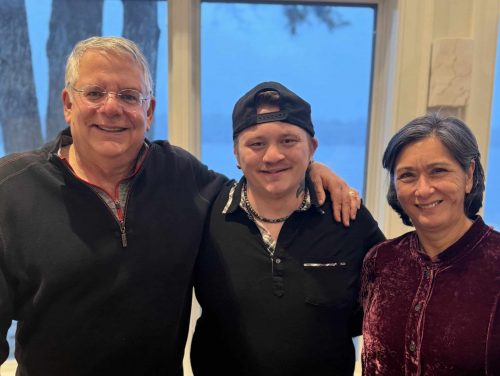
When Scott and Margery Shepard first learned about Waypoint’s Host Home program through a Facebook ad, the idea immediately interested them. But opening their home to a young person they had never met was not a decision they took lightly. They were empty nesters and knew that bringing someone new into their home would change the dynamic of their lives. Still, Scott felt drawn to the opportunity. He had experienced housing instability himself while in high school, and that history gave him some understanding of what it can mean to face young adulthood without a stable foundation. Scott and Margery ultimately decided to take the chance. Now, a year and a half later, Scott says, “It was the perfect fit for us.”
Waypoint’s Host Home program connects young adults ages 18 to 24 who are experiencing homelessness with volunteer hosts who can provide a safe, stable place to live while they work toward greater independence. Waypoint staff support both the young person and the host throughout the experience, and each match is built around the needs and comfort level of the people involved.
Taking the First Step
Scott and Margery first met the young man they would eventually host at a local restaurant. Like most first meetings between people considering living together, it was a little awkward. The decision to move ahead with the match was made easier by knowing they were not making an irreversible commitment. If the match did not work for either the young person or the Shepards, Waypoint had a quick process for changing course. That support gave everyone room to try the relationship without feeling trapped by it.
Once the young man moved in, Scott quickly began to understand that homelessness and housing instability can create problems that extend well beyond having a place to sleep. Many of the challenges they encountered were common to young adults. For example, both his driver’s license and vehicle registration had expired. But other challenges were even more consequential. Medical care had lapsed for a few years and needed to be reestablished.
This experience helped Scott recognize something important about what a host can provide. Much of what he was offering was not specialized expertise. It was the accumulated knowledge that comes from years of navigating adulthood — knowing how to deal with the DMV, make appointments, respond to paperwork, ask questions, and work through problems that at first seem overwhelming.
For someone who has always had adults available to teach those things, that knowledge can be easy to take for granted. For a young person who has not had that steady support, it can make an enormous difference. And because hosts share everyday life with the young person, they may notice needs that do not necessarily surface in a formal meeting with Waypoint. A conversation over dinner or during a car ride can reveal a problem, create an opportunity to offer advice, or simply build the trust that makes someone comfortable asking for help.
More Than Housing
From the beginning, Scott had hoped hosting could mean more than providing a bedroom. One of the things that attracted him to the program was the opportunity to mentor someone. He had done career advising in the past, and that experience became valuable when the young man lost his job within the first few weeks of living with them. Suddenly, the immediate question was not just where he would live, but what he would do next. Scott began helping him think about work and his longer-term future. They identified his natural abilities, and Scott drew on contacts in the community to help him explore possibilities.
At first, the young man tended to think about the kinds of jobs he had already done, or the kinds of work family members had. Scott helped him recognize there might be opportunities he had never considered. The young man first needed time and space to process his past traumas in a supportive home. But over time, the young man chose the career that he wanted and, as a result, decided to take classes at Great Bay Community College and used ApprenticeshipNH to find work.
What Hosts Really Have to Offer
Scott understands why people may hesitate before becoming a host. He and his wife had many of the same concerns. Bringing someone you do not know into your home is a significant decision, and members of their family naturally wondered what could go wrong.
What they encountered was very different from some of those fears. The person who came into their home was a young man who was overwhelmed, discouraged, and uncertain about how to move forward. What he needed was stability, guidance, and someone consistently in his corner.
Scott is also quick to point out that their experience should not be viewed as a template every host must follow. Not every young person needs the same level of support, and not every host will want to provide the kind of hands-on mentoring that came naturally to him. One of the strengths of the Host Home program is that Waypoint works to match the needs of a young person with what a host is realistically able and willing to provide.
For Scott, that is an important consideration for anyone thinking about becoming a host. “It’s important to think about how much you can really give,” he said. For one person, that might mean primarily offering a safe bedroom and a stable household. Someone else may enjoy providing rides, helping navigate everyday responsibilities, offering career guidance, or becoming a mentor. There is no single version of what a successful host has to look like.
A Relationship That Lasts
Scott and his wife were among Waypoint’s early Host Home families, and their experience has helped inform how the program supports hosts and young people today. But when Scott reflects on their time together, the most important part was not the trips to the DMV, the paperwork they sorted through, or even the career planning. It is the relationship they built. And the relationship continues to deepen.
Perhaps the clearest sign of what that relationship has accomplished is something harder to measure than housing, employment, or completed paperwork. It is the change Scott and Margery have observed in the young man himself. When he first arrived, he was discouraged and uncertain about his future. Over time, he has gained considerable self-confidence, has won awards at Great Bay, and continues to work full-time. Scott says he “couldn’t be more proud.”
That may ultimately capture what the Host Home experience has meant to the Shepards. They opened their home because a young person needed a safe place to stay. What developed was something larger: a relationship that provided stability, guidance, encouragement, and an opportunity for a young man to begin seeing possibilities for his future that he had not seen before.