
It began with a phone call at 3:00 in the morning.
Two boys from the neighborhood needed a safe place to stay for a few hours while their father faced a medical emergency. Cindy said yes.
They were not relatives. They were neighbors. What was supposed to be a few hours became the beginning of an unexpected commitment that would change all of their lives.
That September night, Cindy agreed to help. Within hours, the situation became much more serious. The boys’ father was hospitalized, and Cindy received a call saying he might not survive. Doctors were preparing for surgery. While the adults around them waited and hoped, the boys remained with Cindy. Their father eventually woke up, but by then, Cindy had begun to understand that the children needed more than a place to temporarily sleep.
As the days passed, more of the boys’ story began to surface. Through school staff, hospital visits, and information the boys shared, Cindy began piecing together a painful history of trauma, instability, food deprivation, and abuse. She also saw how frightened they became when contact with their father resumed.
Cindy faced a choice no one expected her to make. She could allow the boys to enter state care, or she could become their permanent legal guardian. There was no blood relation and no obligation beyond love and the belief that these children deserved someone who would stay. Cindy chose to stay.
The months that followed were overwhelming. The boys needed mental health support, medical care, stability at school, clothing, food, transportation, and safety. Cindy was also coping with her own crisis. She had lost her sight and was trying to navigate systems that often expected her to complete paperwork and advocate for herself without the accommodation she needed. At times, she was facing eviction. And she was calling doctor after doctor, searching for care.
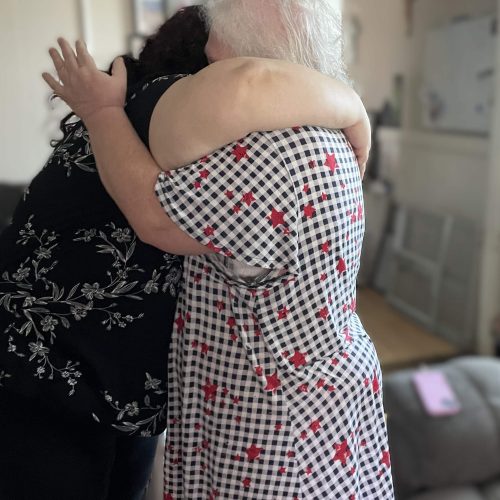
That is when Sofia and Waypoint became part of the story. To Cindy, Sofia was more than a caseworker or advocate. She was the person who listened, showed up, pushed through barriers, and reminded Cindy not to give up. Together, they challenged missing paperwork, appealed benefit decisions, pursued medical care, and kept calling until Cindy finally found a doctor.
After two surgeries in October, Cindy regained her eyesight. To Cindy, that was a miracle, and Sofia was the person who helped her keep believing it could happen.
But even as Cindy regained her sight, the fight for the boys continued. Cindy described moments when the boys could not sleep in beds, struggled with memories, or became terrified at the possibility of returning to the person they associated with harm. She continued to advocate for them even when the process felt stacked against her.
Through it all, Cindy kept doing what kinship caregivers so often do: meeting children’s needs one crisis at a time, often without enough support. She took the children to medical appointments, fought for evaluations, and continued trying to keep both boys safe. She did all of this while managing her own health challenges and housing uncertainty.
Sofia’s role was advocacy, but it was also emotional support. Cindy could call when she needed to vent. Or when she needed someone to remind her that she was not alone.
Stories like Cindy’s also inspired Kinship Strong, a support group designed to give caregivers a place to share resources and build relationships that can last beyond formal services. Caregivers share clothing and food resources, carpool, and remind one another that they are not the only ones facing these challenges. What began with just two people has grown into a community of about fifteen caregivers supporting one another.
Waypoint’s kinship work has also created moments of joy. Sofia described holiday gatherings where dozens of families came together, where Santa visited, gifts were donated by community partners, clothing was shared, and children who had experienced hardship were given a chance to feel celebrated. For families like Cindy’s, those moments matter. They offer more than gifts; they offer belonging.
Cindy’s story is not simple, and it is not over. She is still fighting for the boys’ safety, still seeking legal help, still navigating systems that can be confusing. But her story shows what kinship care can look like at its most powerful: a person with no legal obligation choosing to love, protect, and stand beside children who needed someone to stay.
For Cindy, Sofia helped save her life. For the boys, Cindy offered the safety and persistence they needed. And for Waypoint, their relationship is a reminder of why kinship support matters: because no caregiver should have to do this alone, and no child should have to wonder whether someone will fight for them.
* Names changed to protect privacy.